Feature · Text
Type in yours. They read it in theirs.
The simplest place to start, and the one most people end up using the most. You write a message in your first language. The person on the other end opens NatChatt and reads it in theirs.
In the app
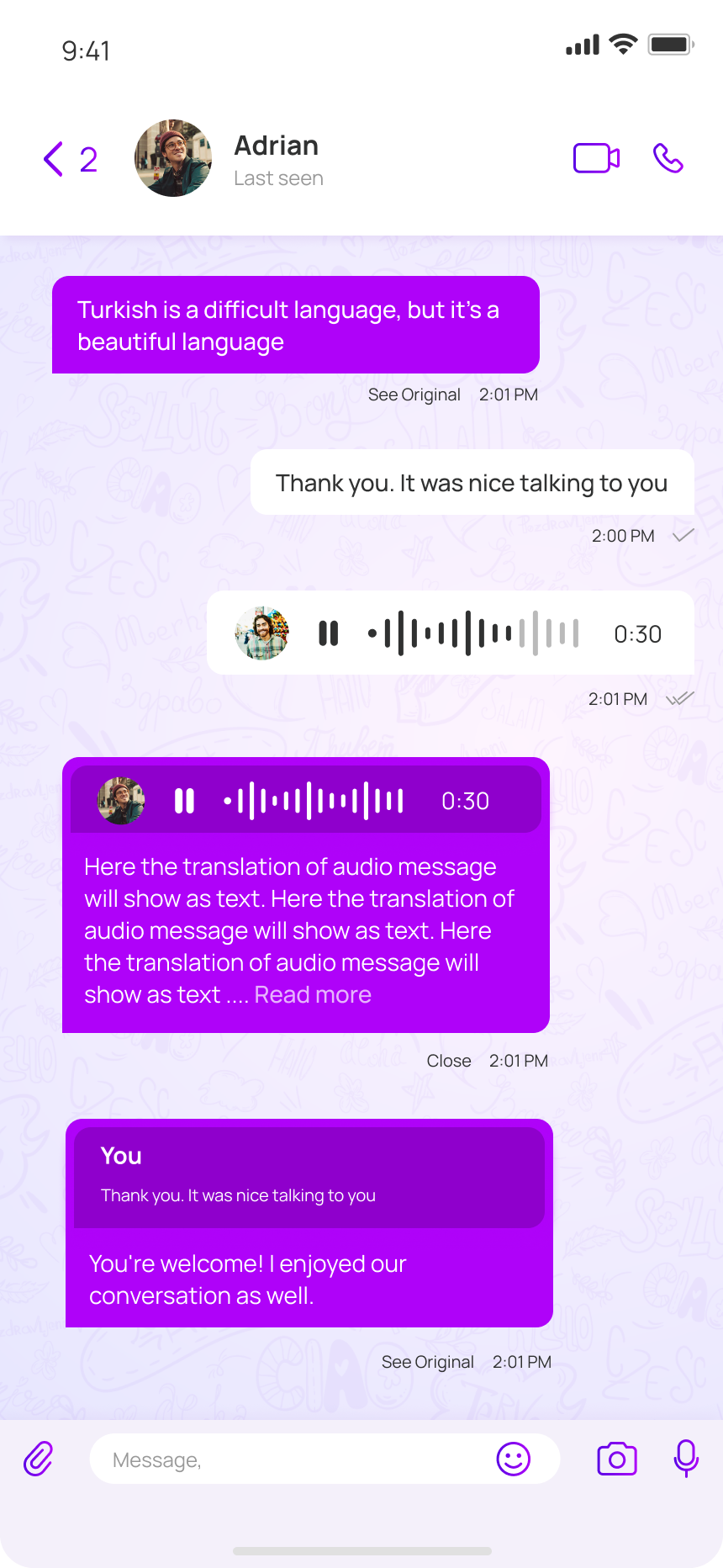
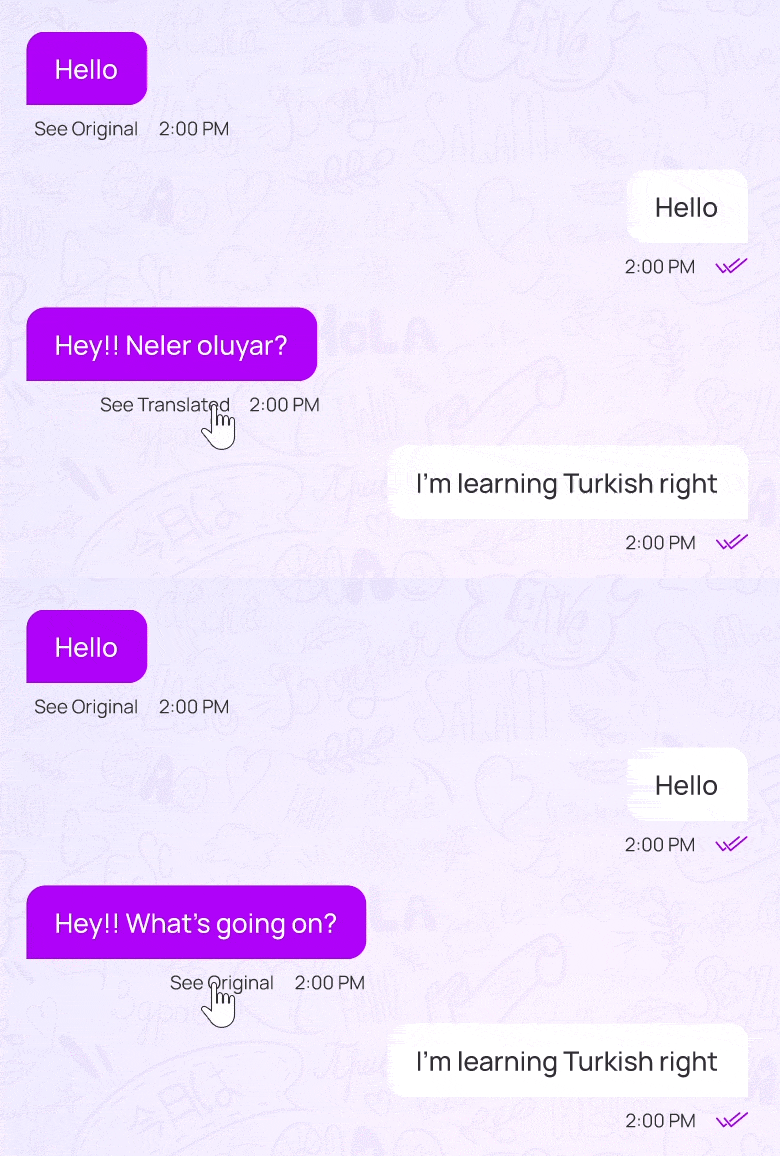
Every bubble has a See Original button.
The version you read is the translated one; the original is one tap away on every message. Voice notes work the same — the audio sits on top of the bubble, the transcript underneath, in the language you read. Across the whole thread, no one has to think about which language belongs to which person.
Read next
-
Group threads
Up to twelve people, four languages, one conversation. Translation per reader.
-
Privacy
Where your messages live, and where they don’t. The short version: only on your phones.
-
Pricing
Free app. Top up credits when you want translation — Google’s cost plus a small platform fee, nothing more.
You don’t pick a language each time. NatChatt learns from the keyboard you’re using and the language your friend chose when they signed up. If you both speak the same language, no translation happens; it stays out of the way until it’s useful.
Each message in the thread shows up in the language the reader prefers. Tap or long-press to see the original. Hold to copy. Reply with a voice note that gets transcribed and translated the same way.
In a group, everyone sees the conversation in the language they chose. A message written in Tagalog reaches the Spanish speaker in Spanish, the Japanese speaker in Japanese, and the other Tagalog speakers untouched. We translate per reader, not per sender, so nobody falls behind the thread.
A small moment
Sunday, two in the afternoon, somewhere between here and there.
You’ve made coffee. You take a photo of the cup and the spoon and the condensation on the saucer. You write: “Wish you were here.” It arrives on her phone as “Sana nandito ka,” underneath the same photo.
She replies. Three sentences. They land on your phone in English, but the Tagalog stays in a soft grey row underneath each one, so if you’re trying to learn, you can read both.